
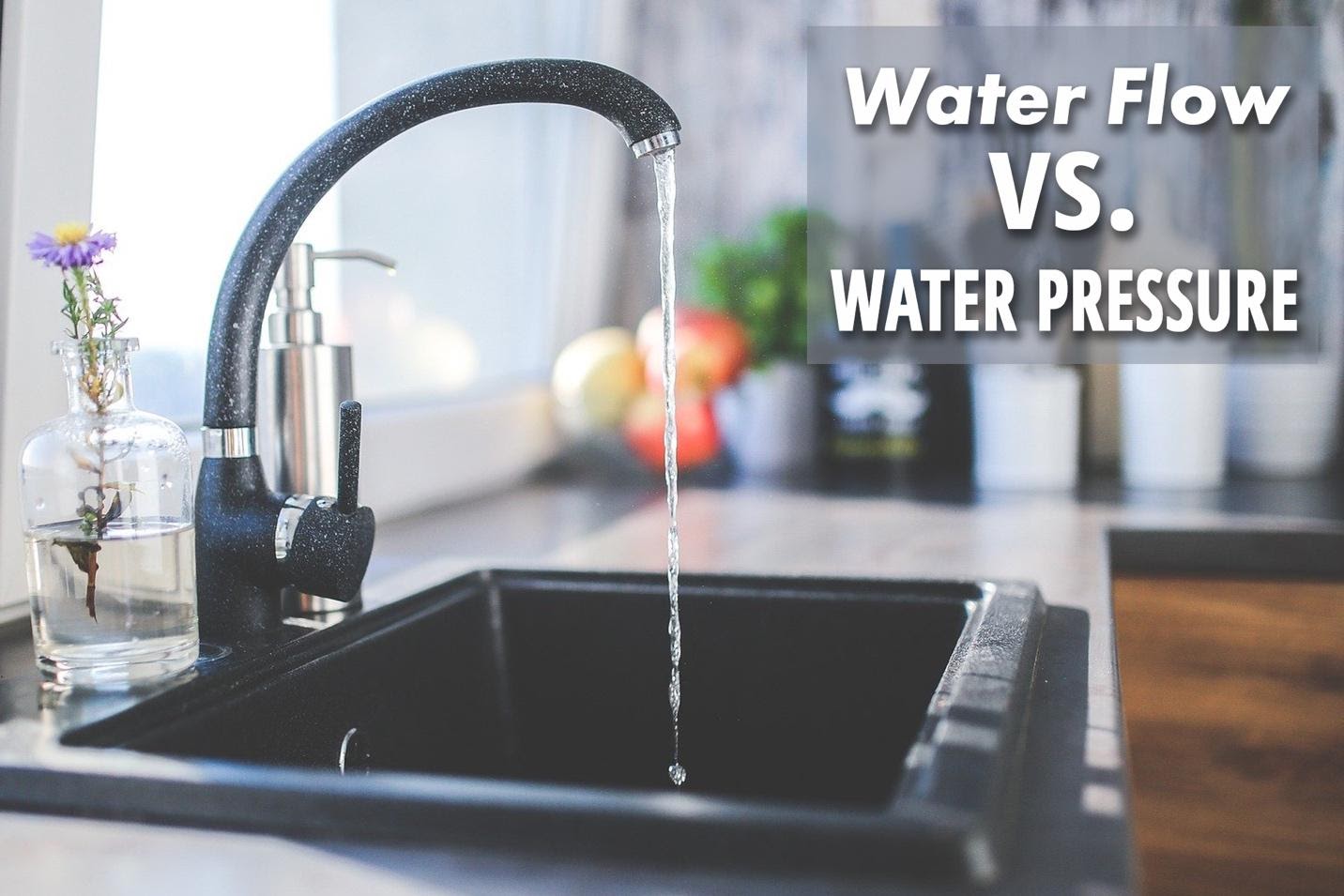
Is there a rule in your home on how many people can use water at once? Maybe the rule is you shouldn’t run the washer while someone is taking a shower, or they will have a cold, weak shower. But, maybe you notice a weak trickle of water from the faucet for no reason. Is it a problem with water flow or water pressure?
Knowing the difference between water flow rate and water pressure will help you solve the puzzle of some plumbing problems and how to deal with them.
What Is Water Flow Rate?
Water flow refers to the AMOUNT of water coming out of a fixture in a certain amount of time, measured by Gallons Per Minute (GPM). If you want to experiment, measure how many cups of water come out of your faucet in 10 seconds. Multiply the cups by 6 and multiply that number by 0.0625 and you will get your GPM.
Typical flow rates for a shower are 1.5 – 3.0 GPM. A kitchen faucet is between 2.0 – 3.0 GPM.
What Is Water Pressure?
Water pressure is how much FORCE is pushing the water through a fixture. Municipalities use pressure tanks or water towers to generate pressure through the water delivery system. Once water reaches your home, a pressure regulator delivers the correct amount of pressure to the home system. A typical water pressure for a home ranges from 45 – 80 psi (pounds per square inch).
Water Flow or Water Pressure?
Let’s go back to the weak trickle of water from your faucet. Here are some factors to think about …
- Does the water flow more vigorously at certain points of the day or when many lines are open at once? This may signal that the pressure is not high enough to keep the water moving.
- Does the water tickle all the time and only on one faucet? This could signal a blockage resulting in poor water flow out of that one pipe.
What You Can Do
One of the best things you can do to defend your home from weak water flow is to have a water softener installed. Soft water can reduce hard elements that cause mineral buildup in your pipes and water fixtures. The hard water buildup in your plumbing will also restrict water pressure.
There are many benefits of a water softener, and better water flow and water pressure are just two of them! The experts at RWI Water Systems can help you choose the right product for your household’s water demands.
Now is the perfect time to invest in your home and your water. Just contact us to get started!


