Have you noticed stubborn white buildup around your faucets, cloudy spots on your dishes, or an unpleasant chlorine taste in your tap water? These are common reasons homeowners begin researching water treatment systems. But when comparing a water softener vs. water filter, it’s important to understand that these systems aren’t designed to solve the same problems.
A water softener primarily removes hardness minerals that cause scale buildup, while a water filter targets specific substances such as sediment, chlorine, and other impurities, depending on the filtration technology. Some households benefit from one system, while others may need both.
For homeowners in Oceanside, Carlsbad, Vista, Escondido, and surrounding North County communities, choosing the right system starts with understanding your water quality and what you want to improve.
Let’s look at the differences between water softeners and whole house water filters, what each system can and cannot do, and how to decide which solution makes sense for your home.
Water Softener vs. Water Filter: What’s the Main Difference?
The biggest difference between a water softener and a water filter is what each system is designed to treat.
A water softener addresses water hardness by removing dissolved calcium and magnesium. These minerals are responsible for many of the frustrating effects of hard water, including limescale buildup, soap scum, and mineral deposits on fixtures.
A water filter, on the other hand, is designed to reduce specific impurities. Depending on the type of filter, it may remove sediment, reduce chlorine taste and odor, or address certain contaminants.
Here’s a quick comparison:
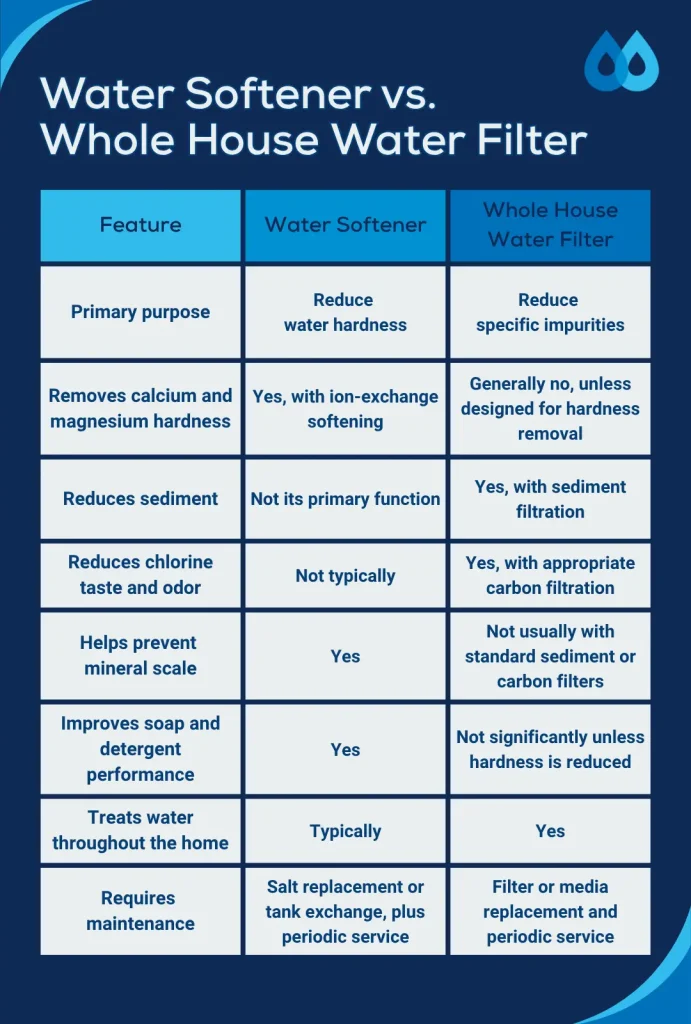
The key takeaway: A water softener solves hardness problems. A water filter solves filtration problems. Neither is automatically a substitute for the other.
What Does a Water Softener Remove?
A traditional water softener removes calcium and magnesium, the two primary minerals responsible for hard water.
Although these minerals are naturally occurring and aren’t generally considered harmful at typical drinking water concentrations, they can create significant inconveniences throughout your home.
How Does a Water Softener Work?
Most traditional water softeners use a process called ion exchange.
As hard water passes through a resin bed, calcium and magnesium ions are exchanged for sodium or potassium ions. This reduces the hardness of the water before it travels through your home’s plumbing.
The result is softened water that is less likely to leave mineral deposits behind.
Key Signs You May Need a Water Softener
You may benefit from a water softener if you’re experiencing:
- White, chalky mineral buildup on faucets and showerheads
- Spots and film on dishes and glassware
- Soap scum on shower doors and bathroom surfaces
- Difficulty getting soap and shampoo to lather
- Stiff or dull-looking laundry
- Mineral scale inside water heaters and other appliances
- Frequent cleaning to remove hard water stains
Hard water can also contribute to scale accumulation in plumbing and water-using appliances. Over time, this buildup may interfere with water flow, heating efficiency, and equipment performance.
Installing a properly sized water softener can help reduce new scale formation and make everyday cleaning easier.
What Doesn’t a Water Softener Remove?
One of the most common misconceptions about water softeners is that they remove everything unwanted from your water.
They don’t.
A conventional water softener isn’t designed to remove chlorine, sediment, pesticides, or most other drinking water contaminants. It also doesn’t significantly reduce total dissolved solids (TDS), because ion exchange replaces hardness ions with other dissolved ions.
If your main concern is the taste, odor, or chemical composition of your drinking water, you may need an additional filtration system.
Water Softener Options From RWI Water Systems
At RWI Water Systems, we understand that homeowners have different water quality needs, installation requirements, and maintenance preferences.
That’s why we offer several residential soft water solutions, including:
Automatic Water Softeners: These systems provide traditional ion-exchange softening and use advanced controls to monitor water consumption and manage regeneration efficiently.
Learn more: The Ultimate Guide to Automatic Water Softeners: How to Choose the Right Soft Water Solution for Your Home
Water Softener Exchange Tanks: For homeowners who prefer not to manage salt or maintain an automatic regeneration system, we offer scheduled soft water tank exchange service.
Whole House No Salt Conditioners: These systems provide an alternative approach to scale control without traditional salt-based regeneration. Unlike ion-exchange softeners, salt-free conditioners generally do not remove calcium and magnesium from the water.
What Does a Whole House Water Filter Remove?
A whole house water filtration system treats water as it enters your home, before it reaches your faucets, showers, and water-using appliances.
Unlike a water softener, which specifically targets hardness minerals, a whole house water filter can be configured to address different water quality concerns.
The substances removed depend on the filtration media and the system’s design.
Sediment Filtration
Sediment filters capture particles such as sand, silt, rust, and other suspended materials.
If you notice visible particles in your water or sediment collecting in faucet aerators, a sediment filter may help.
Sediment filtration can also help protect downstream treatment equipment from particulate buildup.
However, a standard sediment filter does not remove dissolved calcium and magnesium, so it won’t eliminate water hardness.
Carbon Filtration for Chlorine, Taste, and Odor
Municipal water suppliers commonly use chlorine or chloramine to disinfect drinking water. Although disinfection plays an important role in public water safety, some homeowners dislike the taste or smell of disinfected tap water.
Activated carbon filtration can reduce chlorine taste and odor when the system is appropriately designed. Some specialized carbon systems can also reduce chloramine or certain organic chemicals, but these capabilities vary by filter.
If chlorine taste or odor is your primary concern, a properly selected carbon filtration system may be more appropriate than a traditional water softener.
Filtration for Specific Water Contaminants
Depending on the technology, water filtration systems may also address certain metals, chemicals, or other substances. However, not every filter removes every contaminant.
For example, a basic sediment filter won’t necessarily remove dissolved metals, and a standard carbon filter isn’t designed to remove all dissolved salts.
It’s important to choose a system with performance claims supported by testing or appropriate third-party certifications for the substances you want to reduce.
Bottom line: Whole house filtration can improve water quality throughout your home, but the right system depends on what is actually present in your water.
Learn more: Water Testing Explained: How to Identify and Fix Common Water Problems in California
Does a Whole House Water Filter Soften Water?
Usually, no.
This is one of the most important distinctions in the water softener vs. whole house water filter comparison.
Standard sediment and carbon filters do not significantly reduce dissolved calcium and magnesium.
That means you could install a whole house filtration system, notice an improvement in water taste or odor, and still experience hard water spots on your shower doors.
Likewise, you could install a traditional water softener and enjoy reduced mineral buildup while still noticing a chlorine taste in your drinking water.
Some specialized water treatment technologies can address multiple concerns. However, you shouldn’t assume a product provides both softening and filtration simply because it’s marketed as a whole house water treatment system.
Understanding what the equipment actually does is essential.
Do You Need Both a Water Softener and a Whole House Water Filter?
For some households, combining water softening and filtration provides a more complete solution than either system alone.
However, not everyone needs both.
The best choice depends on your water quality, household preferences, and the problems you’re trying to solve.
Situation 1: You Have Hard Water, but Your Tap Water Tastes Fine
If your main complaints are mineral scale, spotted dishes, and soap scum, a traditional water softener may be enough.
An automatic water softener or exchange tank service can reduce hardness throughout your home without requiring you to purchase a separate filtration system for problems you aren’t experiencing.
Situation 2: Your Water Tastes or Smells Like Chlorine, but Hardness Isn’t a Problem
If you’re primarily concerned about chlorine taste or odor, a suitable carbon filtration system may provide the improvement you’re looking for.
Depending on whether you want filtered water throughout the home or only for drinking and cooking, you might consider whole house filtration or a point-of-use drinking water system.
Situation 3: You Have Hard Water and Don’t Like the Taste of Your Tap Water
This is where combining treatment methods can be especially beneficial.
A water softener can reduce hardness minerals throughout the home, while a filtration system can target chlorine or other identified impurities.
With the right combination, you can address both scale-related problems and taste or odor concerns.
Situation 4: You Want Better Drinking Water but Don’t Need Whole House Filtration
Not every homeowner needs to filter every gallon of water entering the house.
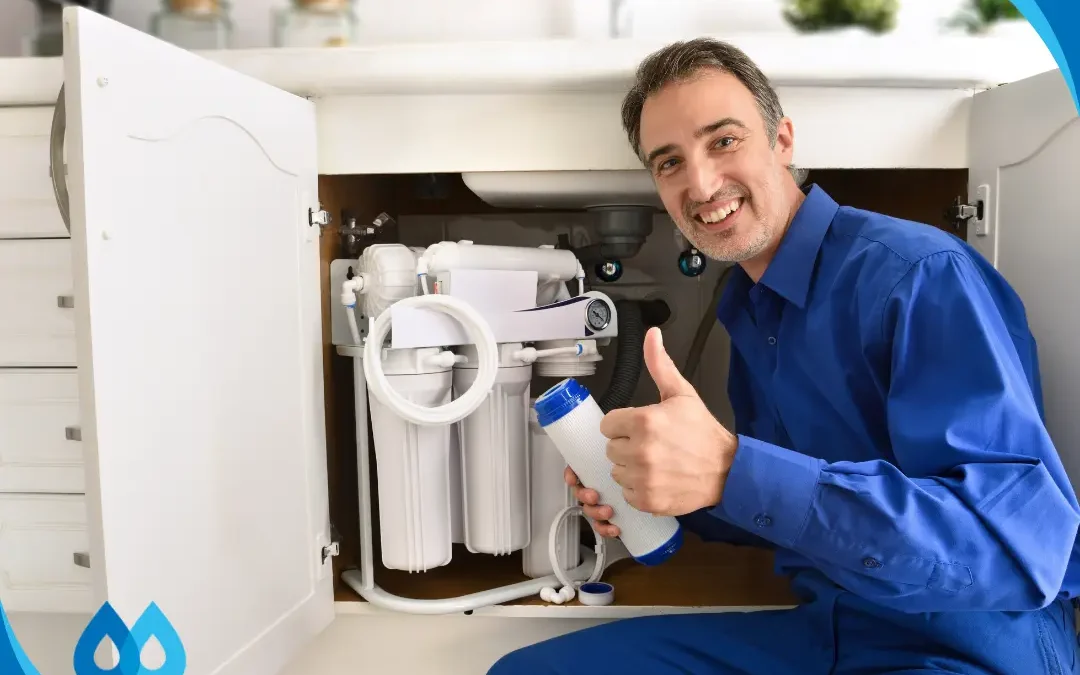
If your main priority is drinking and cooking water, a point-of-use reverse osmosis system may be a practical solution.
Reverse osmosis uses a specialized membrane to reduce many dissolved substances, including hardness minerals, from water at a particular faucet.
For households with hard water throughout the home, combining a whole house softener with a kitchen reverse osmosis system may be worth considering.
Situation 5: You Want Scale Protection Without a Traditional Salt-Based Softener
Some homeowners prefer a salt-free water treatment solution because of maintenance preferences, installation restrictions, or concerns about salt discharge.
A whole house no-salt conditioner may help reduce scale formation without traditional ion-exchange softening.
However, it’s important to remember that salt-free conditioning is not the same as removing hardness minerals. The effectiveness and benefits depend on the specific technology and water conditions.
At RWI, we offer whole house no-salt conditioners as one option for homeowners who want an alternative to conventional water softening.
Water Softener vs. Water Filter: Which System Solves Which Problem?
Still not sure which system you need? Use this quick guide to match common household water complaints with the treatment method most likely to help.
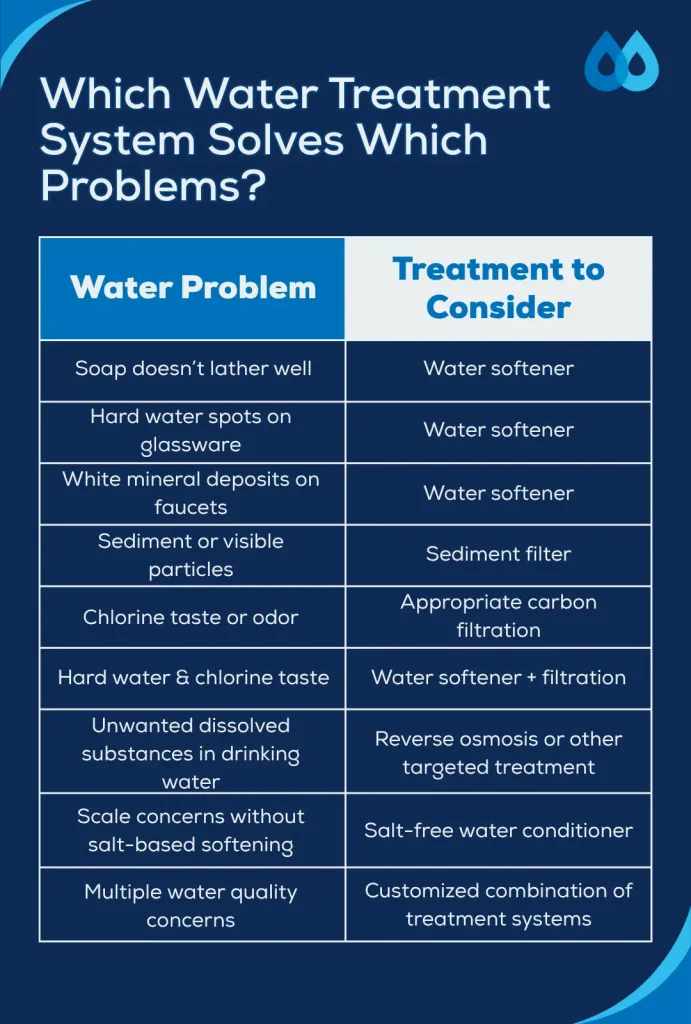
This table is a starting point rather than a substitute for water testing.
For example, unusual water odors can have several causes, and a sudden change in water appearance may warrant contacting your water supplier or arranging appropriate testing before selecting equipment.
What About Reverse Osmosis? Is It Better Than a Water Softener or Filter?
Reverse osmosis (RO) is another water treatment technology that often comes up when homeowners compare softeners and filters.
However, RO systems typically serve a different purpose.
A whole house water softener treats water used for bathing, laundry, dishwashing, and other household activities.
A typical under-sink reverse osmosis system focuses on producing treated water for drinking and cooking.
RO membranes can reduce a wide range of dissolved substances that conventional sediment or carbon filters may not remove. The exact contaminants reduced depend on the system and its tested performance.
For some homeowners, an RO drinking water system is a valuable complement to whole house water softening.
For example, you might use:
- A traditional water softener to reduce hardness throughout your home.
- A reverse osmosis system at your kitchen sink for drinking and cooking water.
This combination addresses different water quality goals without requiring a whole house reverse osmosis installation.
If you’re comparing these options, read our related article: RO System vs. Whole House Water Filtration: Which Is Right for Your Home?.
Why Water Treatment Decisions Matter for North County Homeowners
Water quality can vary throughout North County depending on the water supplier, source water, and local distribution conditions.
Homeowners in Vista, Oceanside, Carlsbad, Escondido, San Marcos, Fallbrook, and surrounding communities may encounter different levels of water hardness and other water quality characteristics.
Even within the same community, water quality can change when suppliers blend or switch water sources.
That’s why choosing a water treatment system based solely on what a neighbor uses isn’t always the best approach.
One household might benefit most from an automatic water softener to control mineral buildup. Another may prefer a salt-free conditioner. A third might prioritize reverse osmosis drinking water treatment.
Before investing in equipment, consider reviewing your water supplier’s annual water quality report and arranging appropriate testing for the concerns you want to address.
How to Choose the Right Water Treatment System for Your Home
Before purchasing a water softener, whole house filter, or reverse osmosis system, ask yourself these five questions.
1. What Water Problems Am I Trying to Solve?
Start with the symptoms you notice.
Are you frustrated by scale buildup? Do you dislike the taste of your tap water? Are you concerned about a particular contaminant?
Clearly identifying the problem helps narrow your treatment options.
2. What’s Actually in My Water?
Water testing can help identify hardness levels and other characteristics that influence equipment selection.
If you’re concerned about specific contaminants, make sure the testing method is appropriate for those substances.
3. Do I Need Treatment Throughout the Home or Only at One Faucet?
Whole house systems treat water entering the home.
Point-of-use systems focus on water at a particular location, such as the kitchen sink.
The best approach depends on whether your concerns involve plumbing and appliances, drinking water, or both.
4. How Much Maintenance Am I Comfortable With?
Different systems have different maintenance requirements.
Automatic water softeners typically require salt or potassium replenishment and periodic service. Exchange tank services reduce the homeowner’s responsibility for regeneration. Filtration systems require cartridge or media replacement, while reverse osmosis systems need scheduled filter and membrane maintenance.
Understanding these requirements helps you choose a system that fits your lifestyle.
5. Would a Combination System Make More Sense?
Sometimes a single treatment method is enough. In other cases, a combination of softening and filtration may be the most effective way to address multiple concerns.
A water treatment professional can help you determine whether separate systems are necessary and how they should be configured.
FAQs About Water Softeners vs. Water Filters
Is a water softener better than a water filter?
Neither is universally better. A water softener is designed to remove calcium and magnesium hardness, while a water filter reduces specific impurities depending on its technology. The better choice depends on the problem you’re trying to solve.
Can a whole house water filter replace a water softener?
A standard sediment or carbon filter generally cannot replace a water softener if your goal is to remove hardness minerals. Some specialized treatment systems address hardness, but they should not be confused with conventional filtration.
Does a water softener remove chlorine?
Traditional ion-exchange water softeners are not designed to remove chlorine. If chlorine taste or odor is a concern, you may benefit from an appropriately designed carbon filtration system.
Will a water filter prevent hard water buildup?
Most standard water filters do not prevent calcium and magnesium scale. A traditional water softener removes the minerals responsible for hardness, while certain salt-free conditioners can help control scale without removing those minerals.
Should a water filter go before or after a water softener?
It depends on the treatment goals and equipment. Sediment filtration is often installed before a softener to help protect the system from particles. Other filtration stages may be installed before or after softening based on water chemistry, manufacturer requirements, and system design. Professional installation helps ensure the components work together properly.
Can I use a water softener and reverse osmosis system together?
Yes. Many households use a water softener to reduce hardness throughout the home and an under-sink reverse osmosis system for drinking and cooking water. Softening the incoming water may also help reduce hardness-related scaling on the RO membrane.
Do I need a water softener if I already have a whole house filter?
Possibly. If your whole house filter primarily removes sediment or chlorine, it may not address hardness. If you still experience mineral deposits and soap scum, testing your water hardness can help determine whether softening would be beneficial.
How do I know which water treatment system is right for my home?
Start by identifying your water quality concerns and checking your water’s characteristics. Then compare the capabilities and maintenance requirements of available systems. A qualified water treatment professional can help you choose equipment suited to your household.
Find the Right Water Treatment Solution With RWI Water Systems
When it comes to the water softener vs. water filter decision, there’s no single answer that works for every home.
If your biggest problem is mineral scale, a water softener may be the right solution. If you’re concerned about sediment, chlorine taste, or other impurities, filtration may be more appropriate. And if you’re dealing with multiple water quality issues, combining treatment methods could provide the results you’re looking for.
At RWI Water Systems, we’ve been helping North County homeowners improve their water since 1964.
Our residential water treatment solutions include:
- Automatic water softeners
- Water softener exchange tank service
- Whole house no salt conditioners
- Reverse osmosis drinking water systems
- Water treatment system maintenance and repair
We serve homeowners throughout Vista, Oceanside, Carlsbad, Escondido, San Marcos, Fallbrook, and surrounding North County communities.
Not sure whether your home needs a water softener, a water filter, or both?
Contact us at RWI Water Systems today to discuss your water quality concerns and explore the right treatment options for your home. Our experienced team can help you understand your choices so you can invest in a solution that addresses your actual needs.