Water is very crucial to our health and sustainability and has been throughout both ancient and modern civilizations. In fact, nearly all settlements have begun centered around sources of water. These water sources have typically needed some sort of purification process to remove harmful contaminants. Throughout history, humans have used a variety of water filtration techniques to ensure that they get the most nutrients and sustenance possible.
Water Filtration in Ancient Greece
Dating back to 2000 BC, Greek writings indicate that water treatment methods were recommended. Back then, people knew that boiling water might purify it, even though they couldn’t exactly describe why. Ultimately, the main goal was great tasting drinking water, and primitive water treatment achieved that purpose.
Around 500 BC, the first known domestic water filter appeared when the Greek scientist Hippocrates invented the Hippocrates Sleeve. He created this because he believed that water should be clean and pure. This filter was a cloth bag through which water could be poured after being boiled.
Water Purification in Egypt
During the third and fourth century, the Egyptians realized the need for eliminating harmful impurities in their water. To solve the problem, they used a variety of water filtration and purification methods. Most methods included heating the water in some way – one option was even submerging hot iron into it! Another common method was filtering the water through sand and gravel.
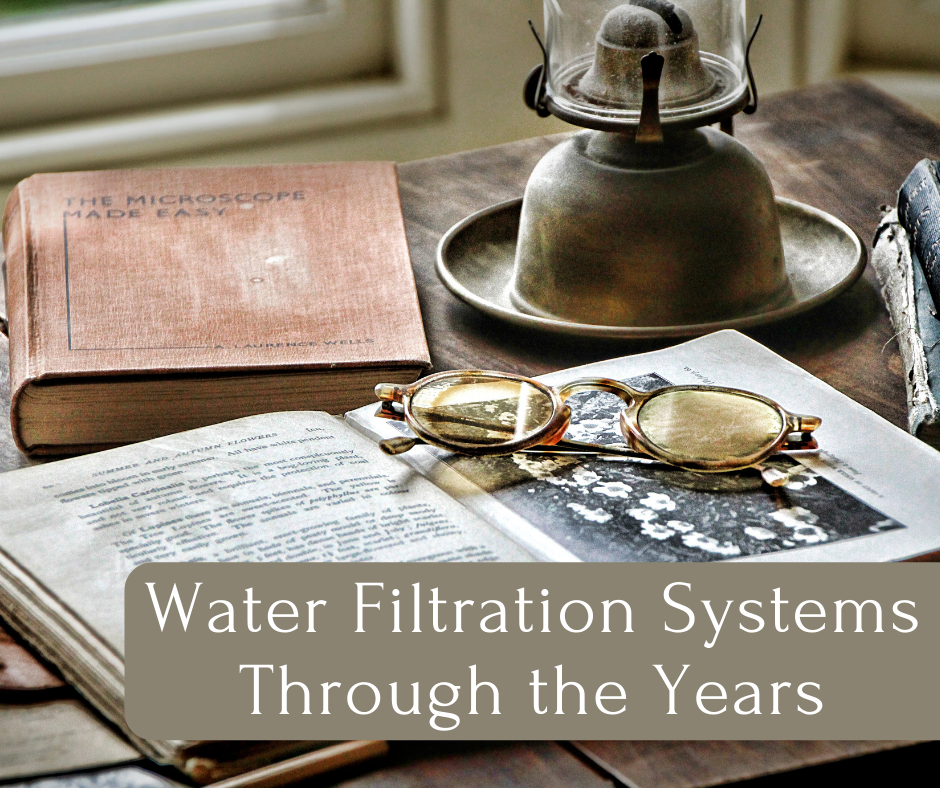
Although some small improvements were made, water filtration processes stayed relatively the same until 1627. At this time, Sir Robert Bacon demonstrated the ability to remove salt from sea water by using advanced sand filtration techniques. Later on, in the 1700s, scientists were able to use the microscope to get a better idea of what was in water that couldn’t be seen by the naked eye. This led to the use of charcoal, sponge, and wool filters to purify water and remove unwanted contaminants.
Finally, by the 1900s, many countries had established water quality standards. This spurred the development and implementation of some of the advanced water filtration methods used by homes and businesses today.
Water Filtration in the Modern-Day Home
Fortunately for our health, water filtration has come a long way throughout history. Now, municipal water treatment plants use advanced filtration techniques to provide safe, quality water to homes and businesses. Even better, residential water filtration systems are now available to the average homeowner, making clean, fresh water a possibility for all.
At RWI Water Systems, we offer both residential and commercial water filtration systems. Are you read to experience the kind of water that ancient civilizations could only dream of? Give us a call today and we’ll help you determine the best water treatment option for your home and business.