If you live in North County, such as in Vista, Oceanside, Carlsbad, or Escondido, you are likely no stranger to the realities of hard water. From stubborn white crust on your faucets to dry skin, dull hair, and appliances that seem to wear out far too quickly, hard water is a constant, hidden tax on your time and wallet.
Fortunately, you don’t have to live with it. Investing in a home water treatment system can completely transform your daily routine. But when you start looking into options, you will quickly encounter two primary solutions: automatic water softeners and portable exchange tank service.
Which one is right for your household? In this guide, we will break down what you need to know about automatic water softeners, answer frequently asked questions, and help you choose the perfect solution from RWI Water Systems to save you time, money, and effort.
What Are Automatic Water Softeners?
An automatic water softener is a whole-house water filtration system that permanently installs into your home’s plumbing. It works through a process called ion exchange.
Inside the system’s tank are thousands of microscopic, negatively charged resin beads. As hard water enters your home, it passes over these beads. The beads act like a magnet, capturing the positively charged hard minerals—specifically calcium and magnesium—and replacing them with harmless sodium ions.
The “automatic” part comes into play during the regeneration cycle. Once the resin beads are full of hard minerals, the system automatically flushes itself out with a brine (salt) solution, cleaning the beads so they can continue softening your water seamlessly. Advanced automatic water softeners track your actual water usage, peak flow rates, and household patterns to ensure they only regenerate when absolutely necessary, maximizing both water and salt efficiency.
Automatic Water Softeners vs. Portable Exchange Tank Service: What’s the Difference?
While both of these systems deliver the full benefits of soft water, they operate under completely different methods. Here is a look at how they stack up side-by-side to help you decide which fits your lifestyle best.
1. Automatic Water Softeners
- How it works: A permanent appliance installed in your home that automatically regenerates itself using salt that you add to a brine tank.
- The Pros: Maximum efficiency, continuous soft water tailored to variable water usage, and lower long-term operating costs.
- The Cons: Requires a connection to an electrical outlet and a drain for the rinse cycle. You are also responsible for purchasing and lifting salt bags into the tank periodically.
- Best For: Homeowners with stable long-term living situations, families with high or fluctuating water usage, and homes that have the proper drainage and electrical hookups available in the garage or utility closet.
2. Portable Exchange Tank Service
- How it works: RWI Water Systems installs a soft water tank in your home. However, this tank does not regenerate on-site. Instead, a professional RWI route driver regularly visits your home, removes the spent tank, and replaces it with a fresh, fully charged one.
- The Pros: Zero maintenance for you. No salt to buy, no heavy lifting, no electrical hookups required, and absolutely no water wasted down a home drain.
- The Cons: Relies on a delivery schedule based on your average usage.
- Best For: Rental properties where permanent plumbing modifications aren’t ideal, homes without a nearby drain or electrical outlet, areas with strict local brine/discharge restrictions, and anyone who wants the luxury of soft water with absolutely zero upkeep or heavy lifting.
Learn more: How Water Softener Exchange Tanks Improve Water Quality In Your Home
Frequently Asked Questions About Automatic Water Softeners
How do I know if I need an automatic water softener?
Look for the classic signs of hard water: white, chalky scale buildup on showerheads; spots on your dishes even after a dishwasher cycle; stiff, faded laundry; and a lack of rich suds when you wash your hands or hair.
Do automatic water softeners use a lot of electricity and salt?
Modern automatic water softeners are incredibly efficient. Unlike older systems that regenerated on a strict, wasteful timer, advanced automatic units monitor your actual gallon consumption. They establish usage patterns and only regenerate when the resin is depleted, saving you significant money on both water and salt.
Can I drink water from an automatic water softener?
Yes. The ion exchange process introduces a very nominal amount of sodium into the water—not enough to taste, and well within safe limits for the vast majority of people. However, if you are on a strict low-sodium diet or simply prefer the crispest taste possible, pairing your water softener with an under-the-sink Reverse Osmosis (RO) drinking water system is the ultimate combination.
How long do automatic water softener systems last?
With basic care and routine annual maintenance checks, a high-quality automatic water softener can easily protect your home for 10 to 15 years or more.
Switch to Soft Water with RWI Water Systems and Save Money, Time, and Effort
Eliminating hard water isn’t just a home upgrade; it’s a financial and logistical relief. Whether you choose an advanced automatic water softener or our convenient portable exchange tank service, partnering with RWI Water Systems directly targets three of your most valuable assets:
1. Save Money 💰
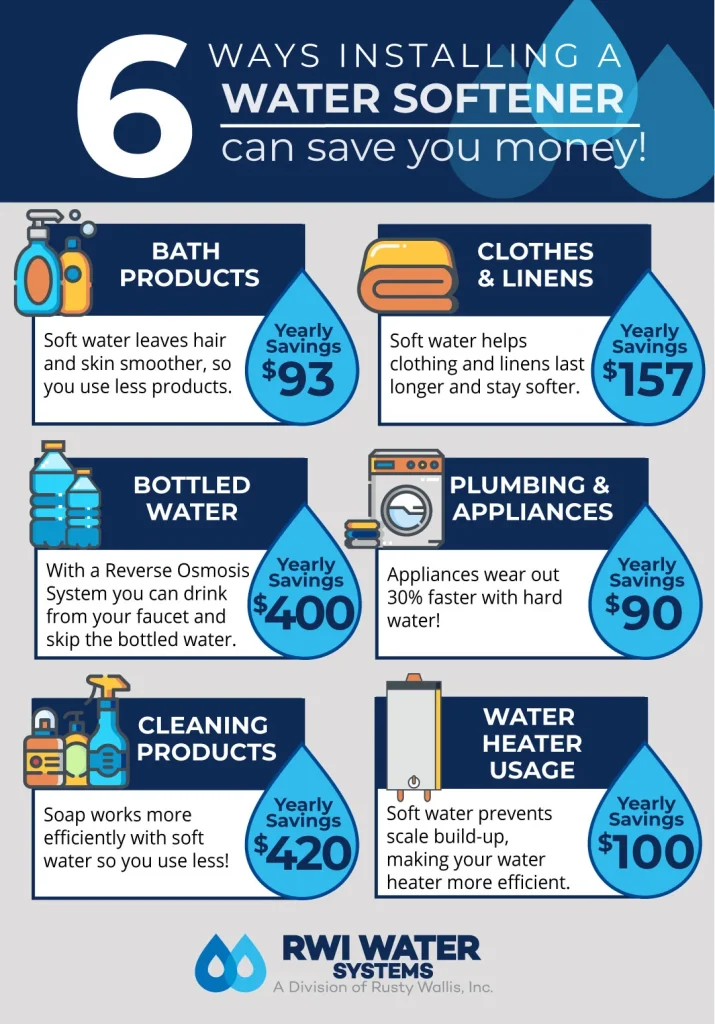
Hard water minerals act like insulation inside your water heater, forcing it to work twice as hard to heat your water. Soft water restores peak energy efficiency, slashing your utility bills. Additionally, soft water prevents scale from clogging and ruining expensive appliances like your dishwasher, washing machine, and coffee makers. You will also save up to 50% on household cleaning supplies, shampoos, and laundry detergents, because soaps lather effortlessly in soft water.
Learn more: 10 Ways You Can Save Money with Soft Water
2. Save Time ⏱️
Scrubbing white mineral crust off shower doors, tile grout, and chrome fixtures is exhausting and time-consuming. Because soft water eliminates scale formation entirely, surfaces stay sparkling clean with a simple wipe-down. No more re-washing cloudy glasses or spending your weekends fighting bathroom grime.
3. Save Effort 🛋️
Hard water strips your skin and hair of their natural oils, leaving you feeling itchy and dry. Soft water allows your body’s natural moisture to return, meaning less effort spent applying endless lotions and hair treatments. If you opt for our Portable Exchange Tank Service, you also eliminate the physical effort of buying, transporting, and pouring heavy 40-pound bags of salt into a brine tank—our friendly route drivers handle everything for you.
Experience the RWI Water Systems Difference in North County
At RWI Water Systems, we don’t believe in a one-size-fits-all approach. We have spent years serving communities across North County—from the coastal breezes of Carlsbad and Oceanside to the valleys of Vista, San Marcos, and Escondido. Our dedicated team is ready to analyze your water, discuss your household needs, and guide you to the perfect fit between a high-efficiency automatic system or a hassle-free exchange tank.
Ready to say goodbye to hard water for good? Contact the local experts here at RWI Water Systems today and get your personalized home water assessment. Better water is just a phone call away!