
If you run a business in North County, you already know that tap water around here isn’t exactly “pure.” Municipal tap water carries heavy mineral loads—mostly calcium, magnesium, sodium, and chlorides. While standard water softeners or basic carbon filters are fine for coffee pots or restroom sinks, many commercial operations require water that is completely free of mineral contaminants.
That’s where deionized (DI) water comes in.
DI water is essentially a blank slate. By stripping out charged mineral ions, deionized water systems produce high-purity water essential for high-tech manufacturing, medical research, commercial washing, and precision equipment maintenance.
Here, we’ll break down how deionization works and which local industries rely on it. Then, we’ll show you how the team at RWI Water Systems helps North County businesses design and maintain the perfect custom DI solution for their specific water quality needs.
What Is Deionized Water and How Does It Work?
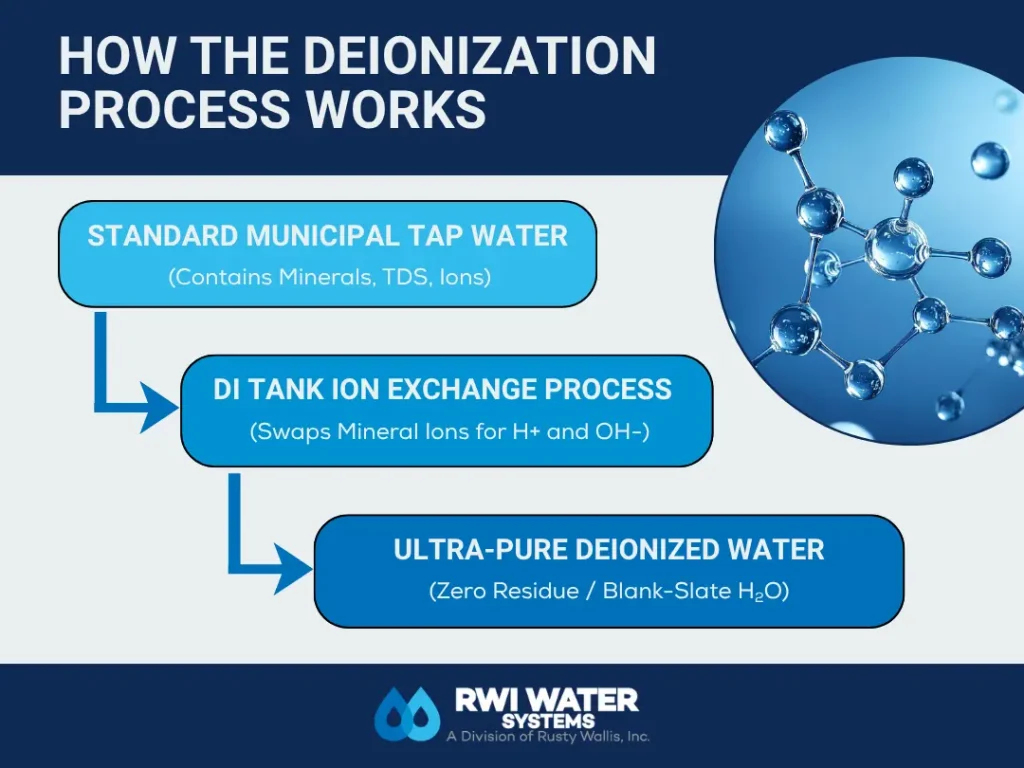
Deionization—often referred to as demineralization—is a chemical process that removes dissolved mineral salts and inorganic ions from tap water.
When minerals dissolve in water, they split into positively charged ions (cations, like calcium, magnesium, and sodium) and negatively charged ions (anions, like chloride, sulfate, and nitrates). A commercial deionization system passes this water through specialized synthetic resin beds:
- Cation Resin: Replaces mineral cations with hydrogen ions (H⁺).
- Anion Resin: Replaces mineral anions with hydroxyl ions (OH⁻).
When the hydrogen and hydroxyl ions combine, they form pure H₂O.
Hardness vs. DI Water: Standard water softeners only swap calcium and magnesium for sodium to stop scale buildup. A deionized water system removes all charged mineral ions. What’s left behind is ultra-pure water with near-zero Total Dissolved Solids. (TDS is the measure of all organic and inorganic materials dissolved in a liquid.)
4 Local Industries in North County That Depend on Deionized Water Systems
From Carlsbad’s biotech corridor to industrial parks in Vista and commercial districts in Escondido, businesses across North County count on high-purity water to protect their equipment, maintain quality control, and satisfy strict regulatory requirements.
1. Medical, Dental and Biotech Labs
In clinical laboratories, pharmaceutical production, and research facilities, even microscopic traces of minerals can alter test results or contaminate sensitive samples.
- Autoclaves and Sterilizers: Using tap water causes mineral scaling inside expensive sterilization equipment, causing breakdowns and costly repairs.
- Reagent Preparation: Deionized water ensures that chemical solutions maintain exact formulas without unwanted mineral reactions.
2. Electronics and Precision Manufacturing
Technology and defense manufacturing sectors rely on DI water for cleaning printed circuit boards (PCBs), semiconductor components, and optical lenses.
Deionized water has high electrical resistance (low conductivity). Because of this, it acts as an ideal rinsing agent that leaves behind zero conductive residue or spotty mineral deposits that could cause electronic short circuits.
3. Auto Detailing and Commercial Window Washing
Ever wonder how high-end window cleaners and mobile detailers get a spot-free finish without hand-drying? The secret is DI water.
When regular tap water evaporates off glass or clear coat paint, it leaves behind the minerals that cause water spots. Rinsing with deionized water allows surfaces to air-dry 100% spot-free, saving commercial detailing and glass-cleaning crews hours of manual labor.
4. Commercial Kitchens, Breweries and Specialty Coffee
While pure DI water is rarely used as a final beverage ingredient on its own (it lacks taste-building minerals), it serves two critical roles in food service:
- Commercial Warewashing: Prevents cloudy spots on glassware, flatware, and stainless steel in high-volume restaurants.
- Custom Water Blending: Local craft breweries and specialty roasters use DI or Reverse Osmosis water as a clean baseline, adding back exact mineral profiles to match specific regional beer styles or espresso extractions.
Why Work with RWI Water Systems for Your Commercial Deionized Water Needs?
No two commercial operations are identical. For example, a biotech lab in Carlsbad requires a vastly different water purity standard and flow rate than an auto detailer in Vista. Choosing off-the-shelf equipment without a proper professional water analysis can lead to system inefficiencies, higher operational costs, or water that fails to meet industry standards.
Partnering with RWI Water Systems gives your business access to decades of local commercial water treatment expertise. Here is how our team helps:
- Comprehensive Water Testing: We test your incoming municipal or well water to measure raw TDS, mineral content, and flow requirements.
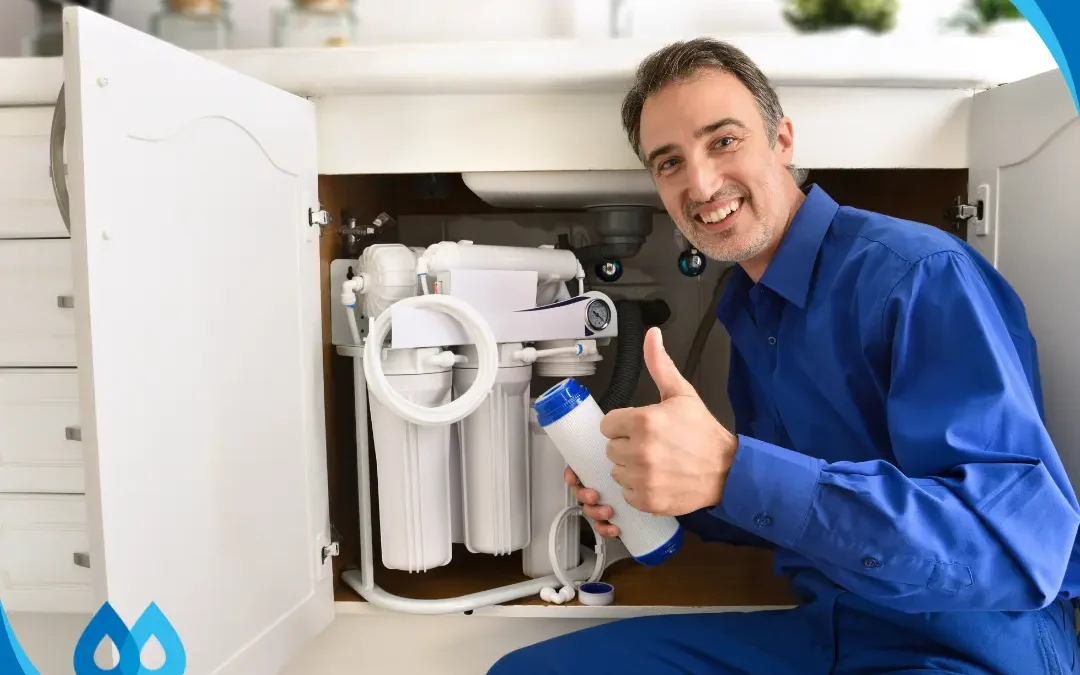
- Custom System Design: We engineer a tailored DI configuration (dual-bed, mixed-bed, or combined with pretreatment like Reverse Osmosis or sediment filters) based on your exact purity needs.
- Professional Installation: Our local technicians handle full system installation, ensuring compliance with plumbing codes and optimal operational flow.
- Maintenance and Support: We provide ongoing service, media replacement, and system health checks so your water quality never drops below required standards.
Finding the Right Deionized Water System in North County
Whether you need a standalone deionization setup or a complete multi-stage commercial filtration system integrated into your facility, working with local experts ensures you get the right capacity without overpaying for unnecessary equipment.
At RWI Water Systems, we have provided trusted, family-owned commercial water treatment solutions across North County since 1964. Contact our local water experts today to analyze your water quality needs and receive a custom recommendation for your facility.