If you are a homeowner in North County, California, you already know that our local water leaves a lot to be desired. From the cost-conscious housing communities on Camp Pendleton to the historic estates of Fallbrook and the bustling neighborhoods of Escondido, tap water in our region presents some unique challenges.
When searching for ways to improve what comes out of your tap, you will quickly encounter two primary scientific terms: water hardness and TDS (Total Dissolved Solids).
Many people treat these two phrases as if they mean the exact same thing, but they don’t. Understanding the difference between water hardness and TDS is the single most important step in choosing the right filtration setup for your home.
Let’s break down exactly what these terms mean, why North County water suffers from both, and which specific systems from RWI Water Systems can solve them.
What is Water Hardness?
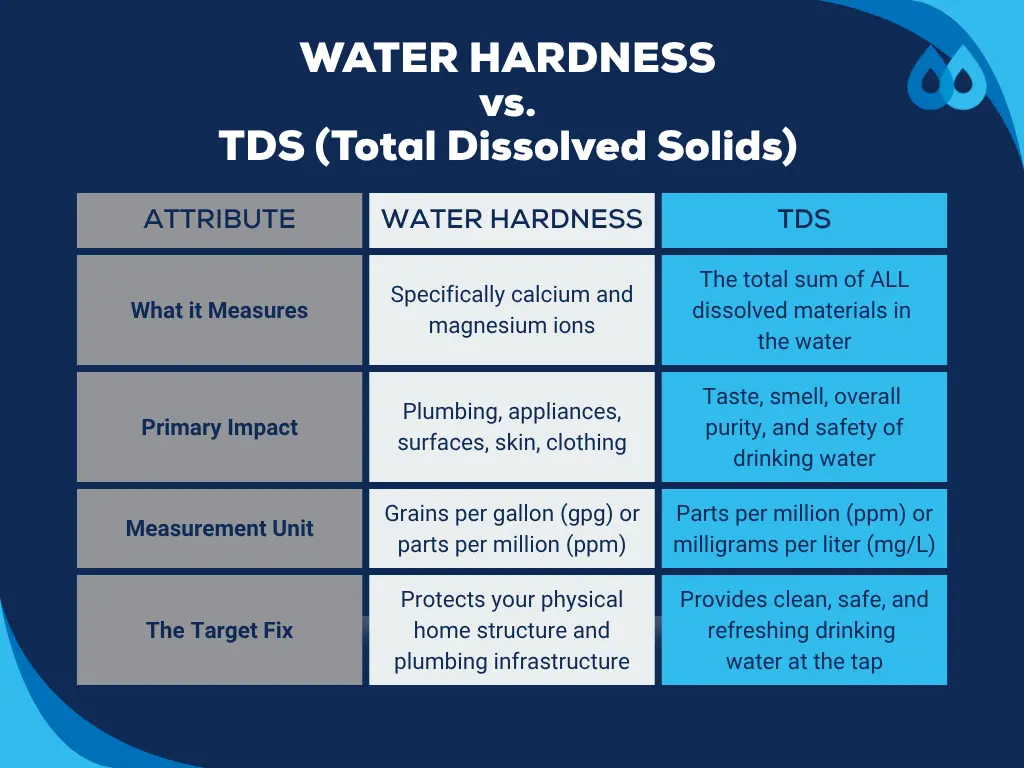
Water hardness refers specifically to the concentration of dissolved multivalent metallic cations—primarily calcium and magnesium—in your water supply.
As water travels through local underground rock formations in Southern California, it naturally dissolves minerals like limestone, chalk, and gypsum. The more calcium and magnesium the water absorbs, the “harder” it becomes.
Signs You Have a Water Hardness Problem:
- White, chalky crust (scale buildup) around your showerheads, faucets, and inside your dishwasher
- Soap that refuses to lather properly, forcing you to use more shampoo or laundry detergent
- Faded, stiff clothing and premature wearing out of fabrics
- Dry, itchy skin and brittle hair after stepping out of the shower
- Drastically reduced lifespans for water heaters, other water-using appliances, and plumbing pipes due to restricted water flow
What is TDS (Total Dissolved Solids)?
While water hardness is strictly a measure of calcium and magnesium, TDS is a much broader umbrella term. Total Dissolved Solids represents the cumulative weight of all organic and inorganic substances dissolved in a given volume of water.
TDS includes hardness minerals, but it also captures everything else traveling invisibly in the water stream:
TDS = Hardness Minerals (Calcium + Magnesium) + Salts (Sodium, Chloride) + Sulfates + Nitrates + Heavy Metals + Carbonates
TDS is measured in parts per million (ppm). For context, while a TDS reading below 300 ppm is generally considered excellent for drinking, it is incredibly common for tap water in cities like Escondido or Vista to register well over 500 ppm—and sometimes even higher on rural well systems.
Related article: Water Testing Explained: How to Identify and Fix Common Water Problems in California
Signs You Have a High TDS Problem:
- Tap water that tastes distinctly metallic, salty, bitter, or “heavy”
- A faint chemical or unpleasant aroma coming from your drinking glass
- Persistent mineral rings or cloudiness inside your coffee pot, tea kettle, or ice cubes
- Overuse of plastic water bottles because nobody in the family wants to drink from the kitchen faucet
Key Differences: Water Hardness vs. TDS
To summarize the relationship simply: all hardness minerals contribute to your TDS level, but not all dissolved solids cause water hardness.
Which Water Treatment System Fixes Which Problem?
Because water hardness and TDS represent different water quality challenges, they require entirely different treatment technologies. Buying the wrong system won’t just waste money; it will leave your primary water issues completely unresolved.
Traditional Water Softeners: The Cure for Water Hardness
A whole-house water softener uses an ion-exchange process to pull calcium and magnesium minerals out of your main water line.
Important Note on Softeners & TDS: A water softener does not lower your overall TDS. It swaps out hard calcium and magnesium ions for mild sodium or potassium ions. Because you are substituting one dissolved mineral for another, your total dissolved solids count will stay roughly the same—but the water will no longer form destructive scale or dry out your skin!
At RWI Water Systems, we provide multiple ways to achieve beautifully soft water:
- Automatic Water Softeners: These are highly efficient, automated systems that analyze your daily water consumption patterns to reduce salt and water waste.
- Water Softener Exchange Tanks: Also known as soft water delivery, these are perfect for homes where traditional automatic softeners aren’t practical. A dedicated RWI technician swaps out your tank on a recurring schedule—meaning zero maintenance and no heavy salt bags for you to buy or lift.
- Whole-House No-Salt Conditioners: These are eco-friendly media systems that alter the chemical structure of minerals to prevent scale buildup without adding sodium to your water supply.
Reverse Osmosis (RO) Systems: The Ultimate Solution for High TDS
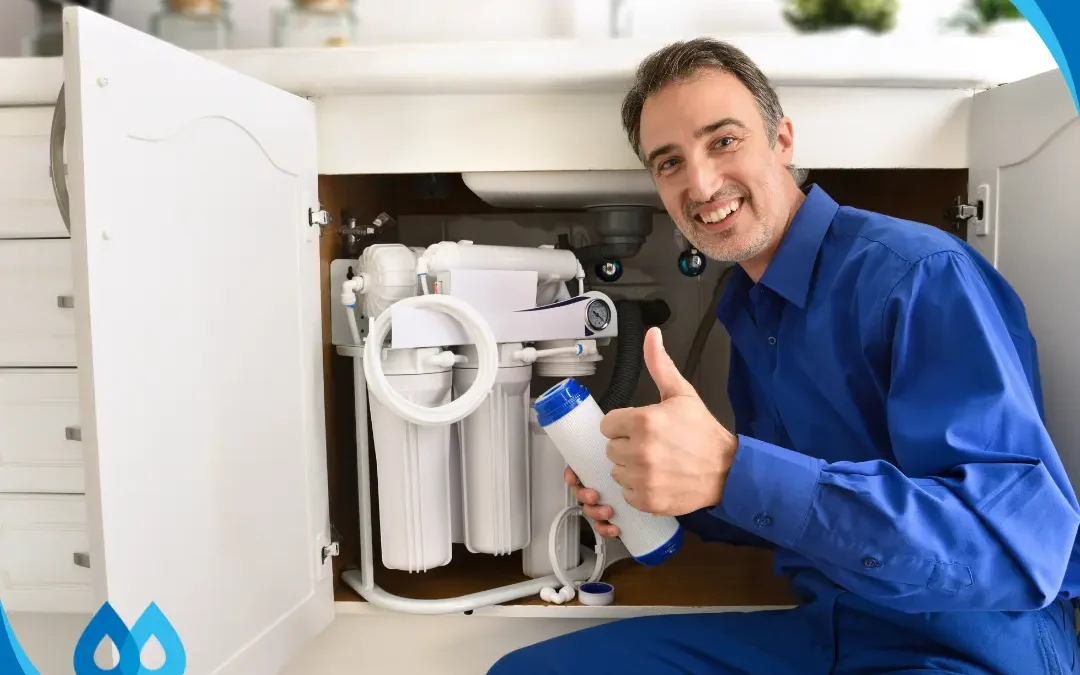
If your primary goal is to drop your TDS levels down to near-zero for crisp, refreshing drinking water, you need a multi-stage Reverse Osmosis system.
An RO system forces water under pressure through an incredibly tight, microscopic semi-permeable membrane. This membrane strips away up to 95% to 98% of all total dissolved solids—including sodium, nitrates, lead, arsenic, and trace pharmaceuticals—leaving you with clean, premium drinking water directly from an under-sink tap.
Take Control of Your Home’s Water Hardness and TDS Levels with RWI Water Systems
Since 1964, the Wallis family and the team at RWI Water Systems have proudly served families across North County. We know exactly how harsh Southern California water can be on your home infrastructure and your wallet, and we can help you achieve total peace of mind.
Don’t spend another day guessing what’s in your water. Contact us today to chat with an expert or explore our full line of RWI Soft Water Systems and RO Drinking Water Systems. Better water is only a phone call away!